







How a card access system fits together
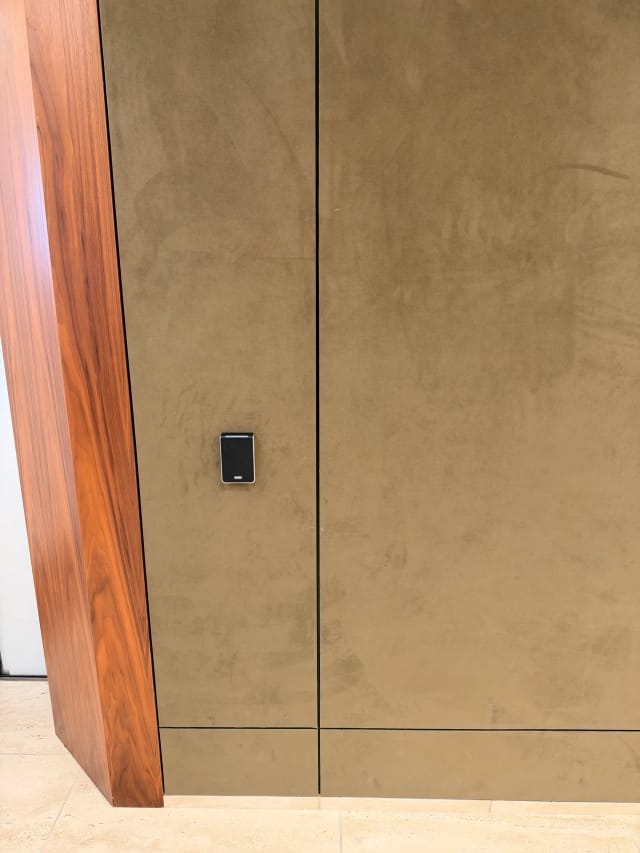
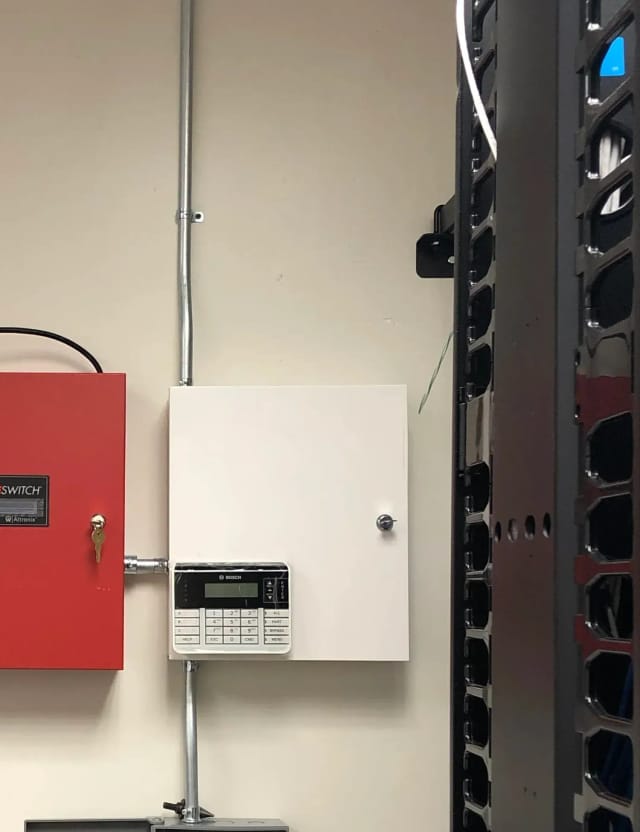
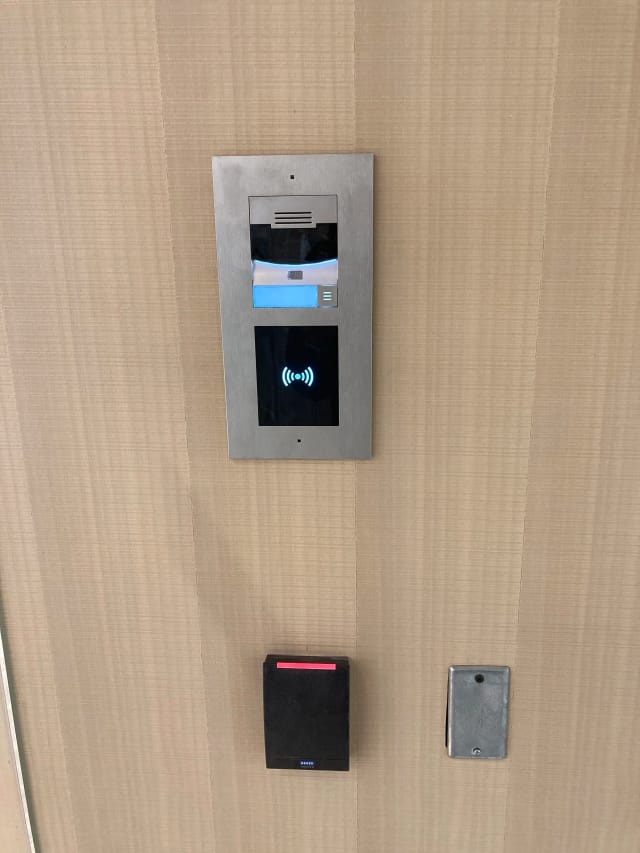
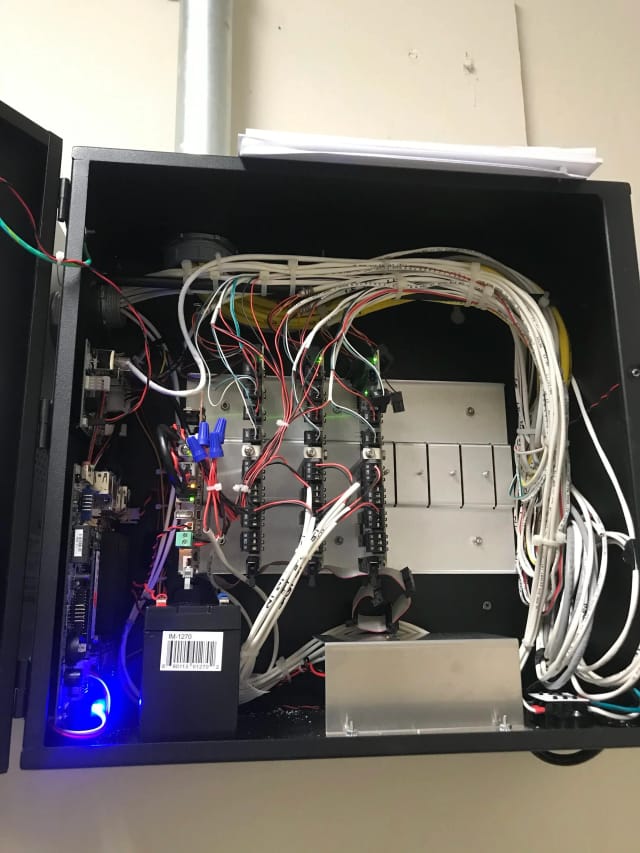
Every controlled door has the same parts. A reader outside asks for a card, fob or phone. A controller decides, logs the attempt and releases a lock: an electric strike in the frame, a maglock at the head, or an electrified exit device. A door contact reports whether the door actually closed, and a request-to-exit device lets people leave without setting off an alarm. Power supplies with battery backup keep it all running. The controllers report to software where you add people, set schedules and pull reports. Software House iSTAR panels, Keyscan, S2 NetBox and Mercury boards are the platforms we install.
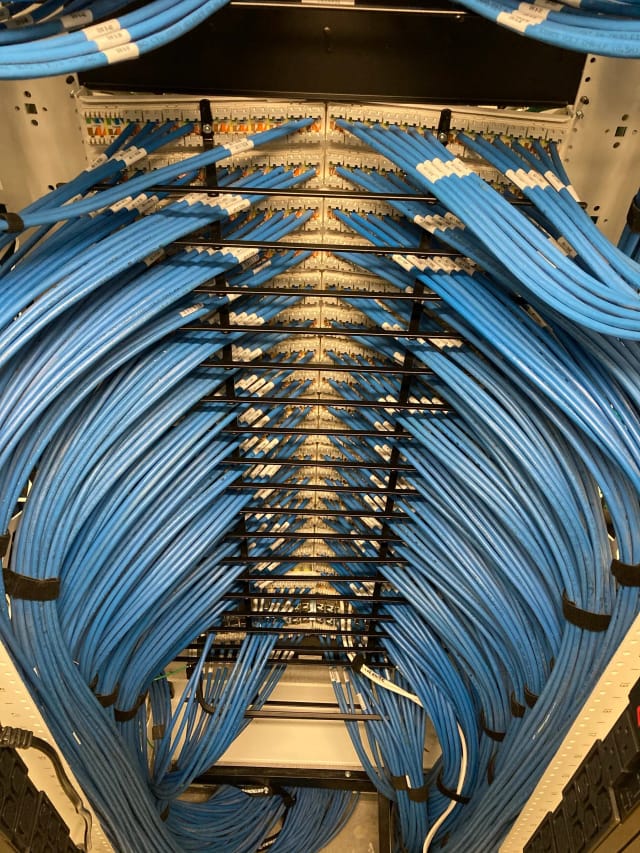
The reader cable matters more than it looks. The Wiegand interface, a wiring standard from the 1980s, is still common between readers and panels, and reader makers publish runs of up to 500 feet for it. Newer readers can talk to the panel over OSDP, the Open Supervised Device Protocol, published as the international standard IEC 60839-11-5 in 2020. We choose the reader and the cable together so the door works on day one and can move to newer credentials later.
Every secured door is still an exit
A lock that keeps people out must never trap people in. New York City's Building Code allows sensor-released electric locks on egress doors in offices, stores, schools, assembly spaces, hotels and apartment buildings only with a list of conditions: a sensor on the egress side that unlocks the door as someone approaches; doors that unlock when the lock loses power; a manual unlocking device marked "PUSH TO EXIT", mounted 40 to 48 inches above the floor within 5 feet of the door, that cuts power to the lock directly and keeps the door unlocked for at least 30 seconds; automatic release when the building's fire alarm or sprinkler system activates; and locking units listed to UL 294. Where automatic turnstiles sit on an exit path, they must release to their full width when the fire alarm activates.
That fire alarm release is wiring that ties into a life-safety system, and under Local Law 128 of 2024 that part of the job is reserved for licensed master or special electricians in New York City. We coordinate it with the building's electrician and fire alarm contractor. Outside the city, your town or village applies the state code, and we confirm door details with its building department before we install.
Hardware people can actually use
Door hardware also has to work for everyone. The 2010 ADA Standards put handles, pulls, latches, locks and other operable parts on doors between 34 and 48 inches above the floor, usable with one hand without tight grasping, pinching or twisting of the wrist, and with no more than 5 pounds of force. For an unobstructed forward reach, the standards cap the high reach at 48 inches. We mount readers and exit buttons inside those limits.
Keyless entry in NYC apartment buildings
If you own a multiple dwelling in New York City and use key fobs, cards, phone apps or biometrics to let tenants in, the Tenant Data Privacy law (Local Law 63 of 2021) applies. Owners must give tenants a data retention and privacy policy, get express consent before collecting reference data, collect only a short list of data (such as name, unit, credential number and the time and method of access), destroy authentication data within 90 days unless it is anonymized, and not sell or share the data outside narrow exceptions, or use the system to harass or evict a tenant. We set the system's logs and user fields up with that in mind.
What to prepare
- A list of the doors, gates and rooms to control, and who needs each one, when.
- Photos of each door: the frame, the hardware, and whether it is glass, wood or metal.
- Your current system and credentials, if any. Some cards can be reused.
- The building's fire alarm contractor and electrician, so the release tie-in is planned early.
- For apartment buildings in NYC, who will handle the tenant privacy notice.
What moves cost and time
- Door count and hardware. A glass storefront door, a double door or a door with an old frame takes more work than a standard metal door.
- Distance to the closet. Long runs, floors to cross and hard ceilings add labor.
- Fire alarm and elevator tie-ins. Coordination with other trades adds scheduling time.
- Credentials. Mobile credentials and printed badges cost differently from plain cards.
How we run an access control job
We walk every door with you free, then send a door schedule and a written proposal with the schedule and the price. Our crew wires the panels, mounts the readers and locks, loads your people and schedules, tests every door, and trains your staff. Innovation Technology & Security LLC holds a New York State alarm installer license, #12000376737, and every job is finished on time and on budget, or 15% off.
Sources
- Card Access Systems InnoTech, old website.
- Wiegand interface Wikipedia.
- IEC 60839-11-5:2020, Open supervised device protocol (OSDP) International Electrotechnical Commission.
- Building Code, Chapter 10, Means of Egress, section 1010 New York City.
- Local Law 128 of 2024 New York City Council.
- 2010 ADA Standards for Accessible Design U.S. Department of Justice.
- Tenant Data Privacy Law NYC Department of Housing Preservation and Development.


