






What an intrusion system is made of
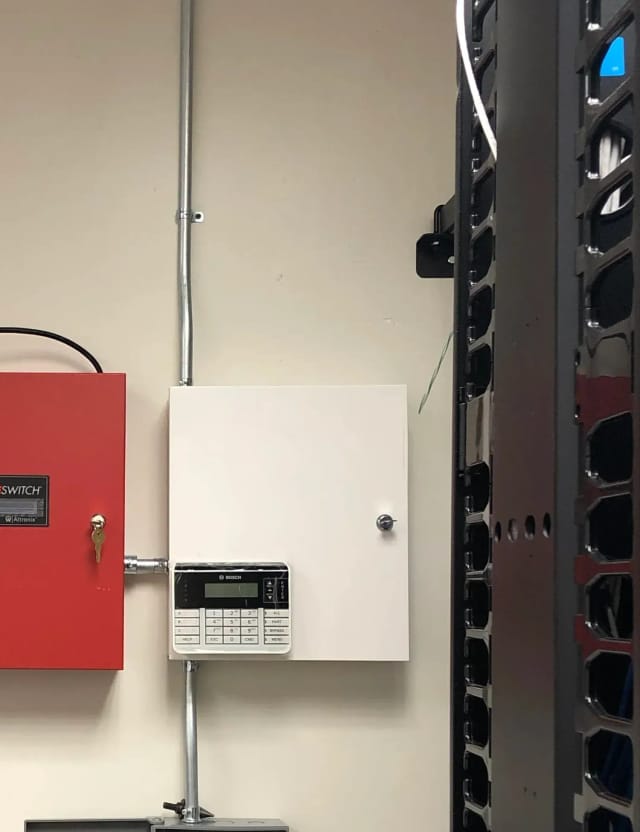
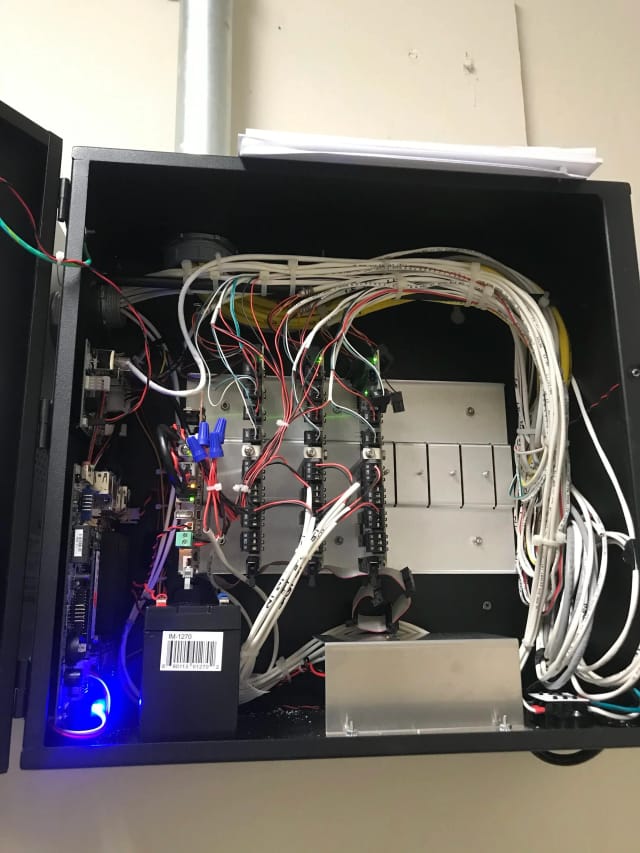
An intrusion alarm is a set of layers around a control panel. The perimeter comes first: contacts on doors and windows, and glass-break detectors that listen for breaking glass, so an alarm starts before anyone is inside. Motion detectors cover the rooms people would have to cross. Keypads sit at the doors people use, so arming and disarming is a habit, not a hunt. A siren tells everyone something is wrong, and a communicator sends the alarm out by cellular or network connection to your phone or to a monitoring service. A good design protects every way in without asking staff to remember a ritual every night.
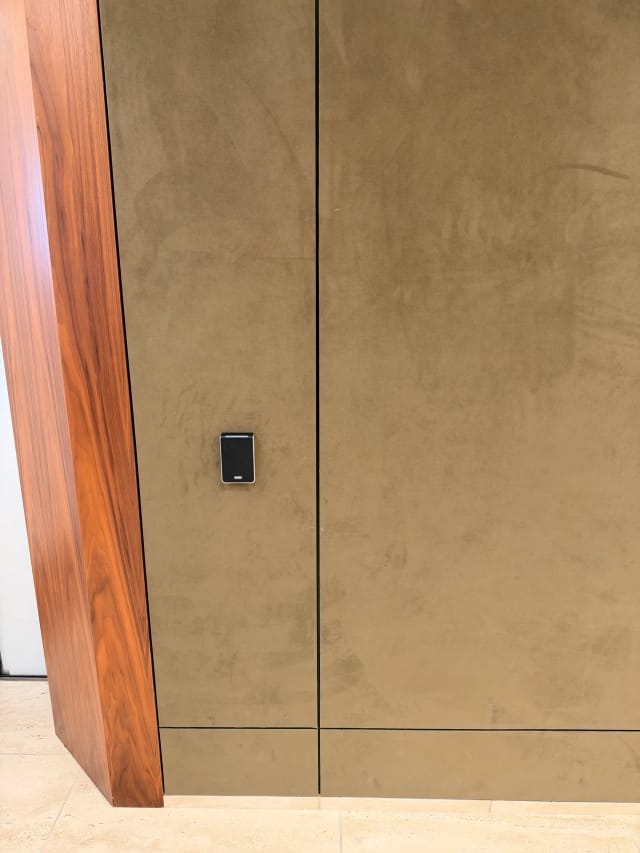
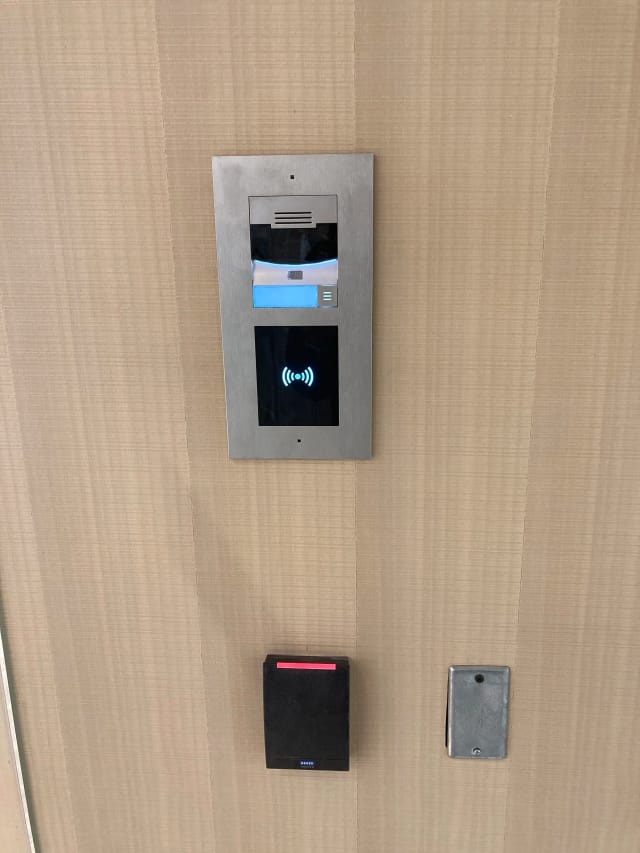
Bosch intrusion panels are among the systems we install, and we connect them to card access where it makes sense: a badge at the front door can disarm the area behind it, and an alarm can pull up the camera that saw it.
New York licenses alarm installers
In New York, installing, servicing or maintaining a system that detects intrusion, break-in, movement, sound or fire is licensed work. Under General Business Law Article 6-D, no person may do that work, or hold themselves out as able to, without a license from the Department of State, and that has been the law since October 1, 1992. The license runs for two years. To earn it, an applicant must be at least 18, be fingerprinted, complete at least 81 hours of approved coursework and pass the state exam. A company license must be run under a member or manager who meets the requirements, unlicensed employees must carry Department of State identification cards, and the employer must submit their fingerprints, which the department forwards to the Division of Criminal Justice Services. The license must also be posted at the business.
You can check any installer in seconds with the Department of State's licensee search. Innovation Technology & Security LLC's license, #12000376737, is an Alarm Installer (Statewide) license, valid through July 10, 2028.
Alarm permits and false alarms on Long Island
Nassau and Suffolk counties both require alarm owners in their police districts to register their alarms, and both fine repeat false alarms. In Nassau, a permit costs $100 for a home and $200 for a business and lasts two years; registered locations get two false alarms before fines start, and unregistered ones are fined from the first. Suffolk's program, which began on June 1, 2016, charges $50 for a home and $100 for a business, with the same two-false-alarm grace. Suffolk's police answered nearly 98,000 false alarms in 2015, and the county names three main causes: user error, system faults, and things like pets and moving curtains. Check the current fees with your police department before you file.
State law also limits who pays. Under General Business Law 69-vvv, a town or county may charge an alarm company for a false alarm only when it comes from a deficiency in the system or an error by the alarm company or its central station. False alarms caused by the owner or the people using the system remain the owner's. That is a good reason to have the system designed, programmed and maintained properly, and to train every user.
What to prepare
- A floor plan or a sketch with every door, window and roof hatch marked.
- Who arms and disarms, and when: opening and closing times, cleaners, deliveries.
- Pets, plants, heaters or signs that move, which matter for motion sensor placement.
- Whether you want alerts on your phone, a monitoring service, or both.
- Your police district's alarm permit form, or ask us to point you to it.
What moves cost and time
- Openings. Every protected door, window and hatch adds a device and a run of cable or a wireless transmitter.
- Construction. Finished walls, glass storefronts and high ceilings slow the install.
- Integration. Tying arming to access control and alarms to cameras adds programming and testing.
- Communication. Cellular, network or both, and whether a monitoring contract is part of the job.
How we run an alarm job
We walk your property free, then send a zone plan and a written proposal with the schedule and the price. Our crew installs and programs the system, walk-tests every sensor, confirms every signal, and trains the people who use it. Every job is finished on time and on budget, or 15% off.
Sources
- Card Access Systems InnoTech, old website ("Bosch Intrusion").
- General Business Law section 69-L, section 69-M, section 69-Q and section 69-VVV New York State.
- Get Security or Fire Alarm Installer License New York Department of State.
- Licensee Search: Innovation Technology & Security LLC New York Department of State, Division of Licensing Services.
- Nassau County Alarm Permit and Suffolk County Alarm Permit All Island Security.


