



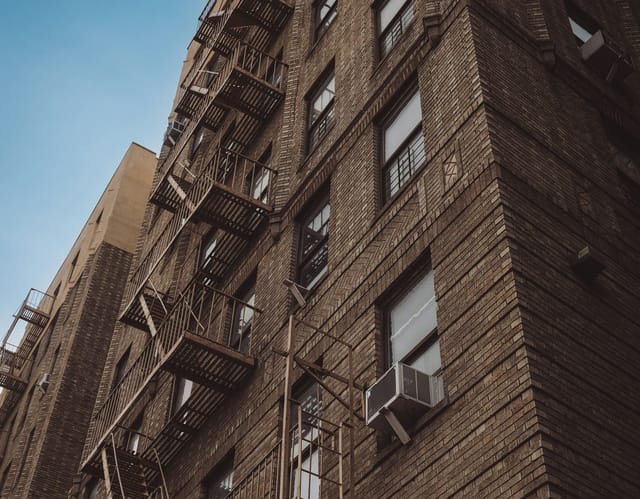


What a building intercom does now
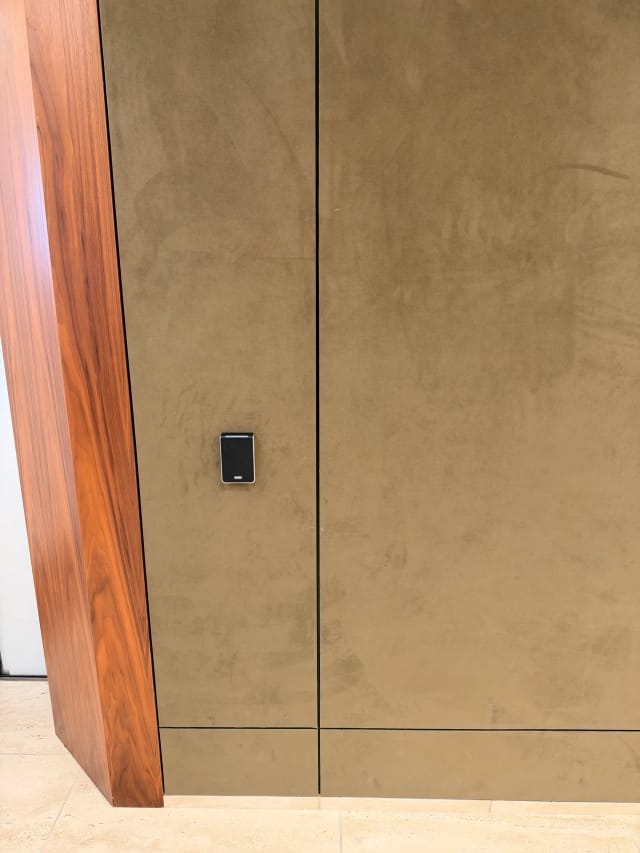
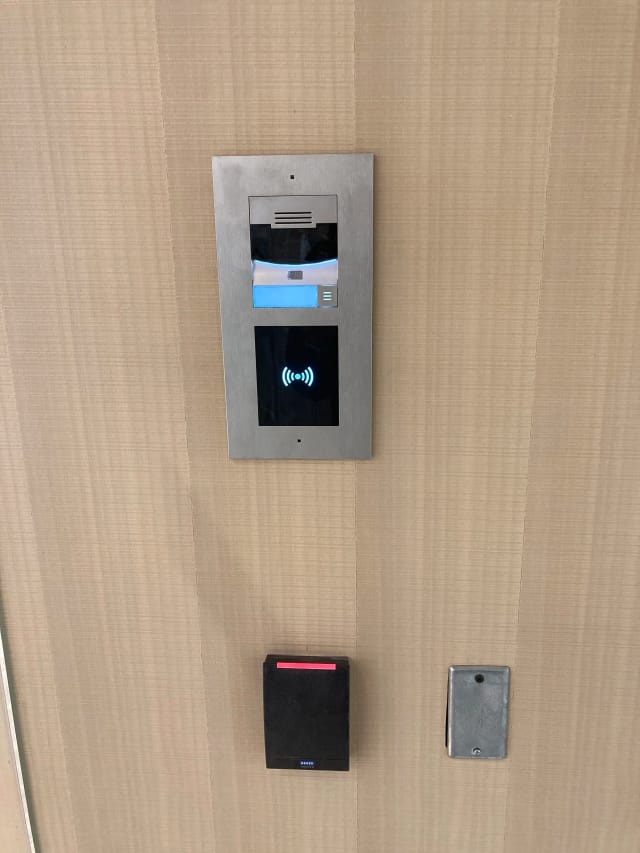
A classic intercom is a button panel at the street door, a speaker and a door release button in each apartment. That still works, and in many buildings it is all that is needed. Video panels add a camera so the person inside sees who is calling. App-based systems send the call to a resident's phone, so they can let in a delivery from anywhere, and the management office can add or remove residents without rewiring. Many entry panels now include a card or fob reader, so the same box handles visitors and residents.
We install Aiphone, Comelit and ButterflyMX systems. The choice depends on the building: how many units, what cable is already in the walls, whether residents want an app, and who will manage the directory. IP video panels usually run on network cable and can be powered over it with Power over Ethernet, which simplifies the wiring at the door.
New York's rules for apartment entrances
New York's Multiple Dwelling Law sets the baseline for apartment buildings. Under section 50-a, every class A multiple dwelling built or converted after January 1, 1968 with eight or more apartments must have an intercom at an automatic self-locking door to the main entrance hall or lobby. It must let each apartment talk with a person outside that door and release the lock from the apartment. Other street, yard and cellar entrances need automatic self-closing and self-locking doors. Buildings converted before 1968 must add the doors and the intercom when tenants in a majority of the apartments request or consent in writing. The doors and intercoms must be of an approved type, installed and maintained the way the housing department prescribes.
If the new system lets tenants in with fobs, cards, phone apps or biometrics, New York City's Tenant Data Privacy law (Local Law 63 of 2021) also applies. The owner must give tenants a data retention and privacy policy, get express consent before collecting their data, keep only a short list of it, destroy authentication data within 90 days unless anonymized, and not sell or share it outside narrow exceptions. We set the directory and logs up with that in mind and tell you what the notice must cover.
A panel everyone can use
The 2010 ADA Standards require operable parts to be usable with one hand, without tight grasping, pinching or twisting of the wrist, with no more than 5 pounds of force, and they cap an unobstructed forward reach at 48 inches above the floor. We mount panels, readers and buttons inside those limits and away from glare that would wash out the camera. The door release has to work with the building's egress: the door must still open freely from inside, and in New York City any lock that releases on the fire alarm is tied in by a licensed electrician under Local Law 128 of 2024.
What to prepare
- The number of apartments, offices or suites, and how the directory should read.
- Photos of the entrance door, its frame and lock, and the existing panel and stations.
- Whether residents want video, an app, or both, and who manages the list.
- The building's network contact, if the panel will use the internet.
- For NYC apartment buildings, who will issue the tenant privacy notice.
What moves cost and time
- Units and stations. Apartment count drives the number of stations or app accounts.
- Existing cable. Reusable sound cable saves time; buildings with none need new runs up the risers.
- The door. Old frames, glass doors and vestibules with two doors add hardware and labor.
- Integration. Card readers, cameras and elevator control add equipment and programming.
How we run an intercom job
We walk the entrance with you free, recommend the system that fits the building, and send a written proposal with the schedule and the price. Our crew mounts the panel, wires the release, loads every unit and tests each one with you. Every job is finished on time and on budget, or 15% off.
Sources
- Intercom Integration/Solutions and Home InnoTech, old website.
- Multiple Dwelling Law section 50-a New York State.
- Tenant Data Privacy Law NYC Department of Housing Preservation and Development.
- 2010 ADA Standards for Accessible Design U.S. Department of Justice.
- Power over Ethernet Wikipedia.
- Local Law 128 of 2024 New York City Council.


