
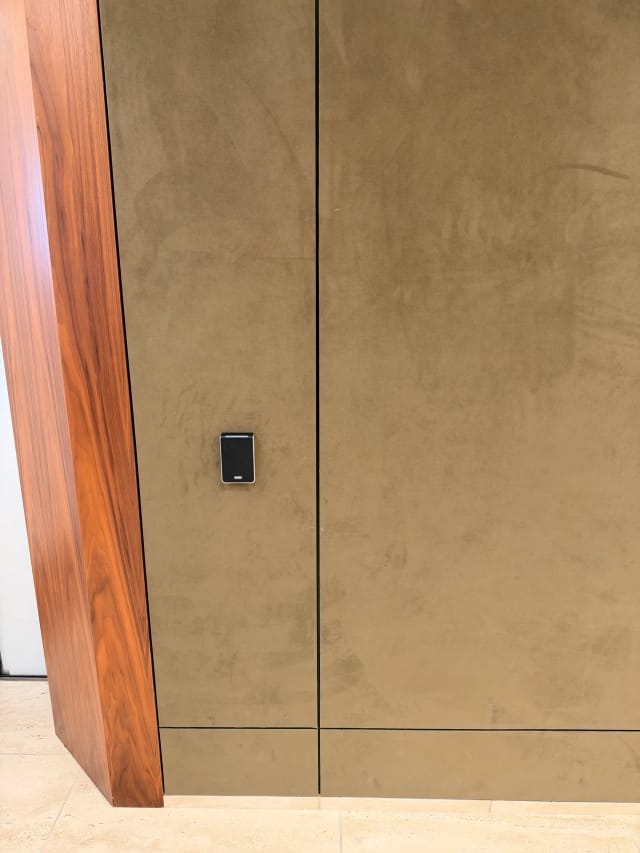
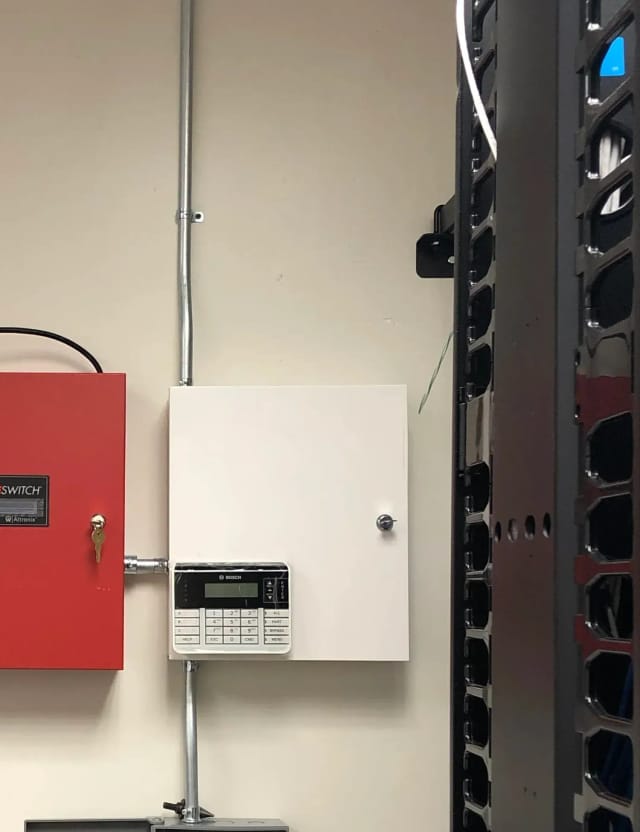
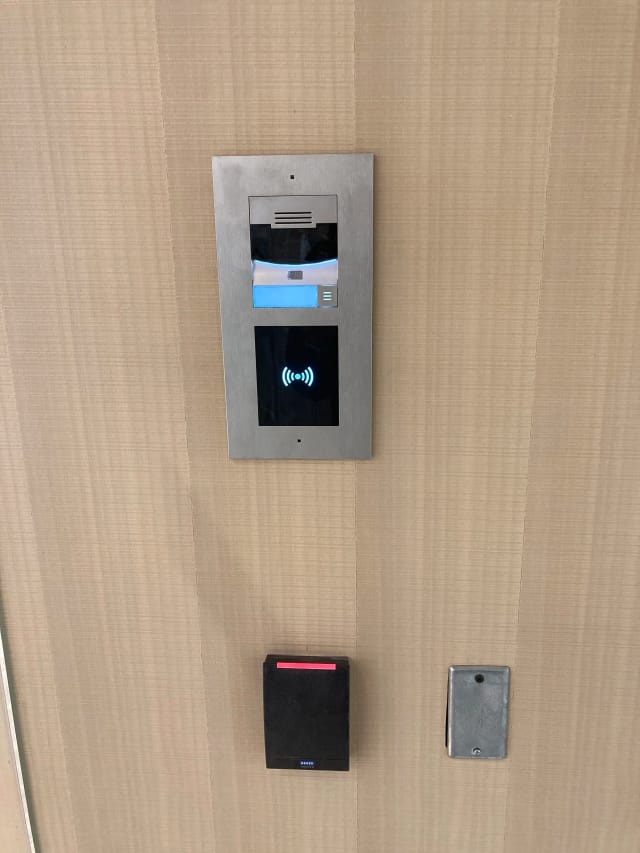

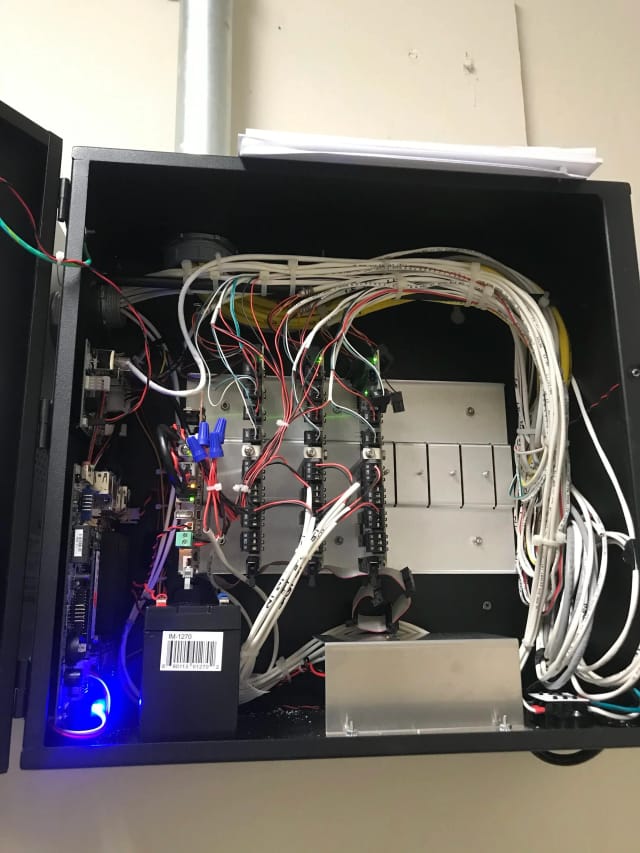









A card reader looks like a small job: a reader, a lock, a cable. In New York City, the door it controls sits under four sets of rules at once: the Building Code's exit rules, the ADA's accessibility standards, the city's rules on who may do the wiring, and, in apartment buildings, a tenant privacy law. Here is what each one asks of a door.
The door must still let people out
The Building Code's chapter on means of egress allows electric locks released by a sensor on exit doors in offices, stores, schools, assembly spaces, hotels and apartment buildings, but only when every condition is met:
- A sensor on the egress side detects someone approaching and unlocks the door, and the door also unlocks if the sensor loses power.
- Loss of power to the lock unlocks the door.
- A manual unlocking device within 5 feet of the door, mounted 40 to 48 inches above the floor and marked "PUSH TO EXIT", cuts power to the lock directly and keeps the door unlocked for at least 30 seconds.
- Activation of the building's fire alarm, sprinkler or fire detection system unlocks the door until the system is reset.
- The locking units are listed to UL 294.
Delayed egress locks, which hold a door for 15 seconds (30 where the department approves) after someone pushes, have their own rules and signs. Automatic turnstiles that count toward the exit path must release to their full width when the fire alarm activates and must break away by hand in a power failure.
The hardware must work for everyone
The 2010 ADA Standards set limits for the parts people touch. Handles, pulls, latches, locks and other operable parts on doors must be 34 to 48 inches above the floor. Operable parts must work with one hand, without tight grasping, pinching or twisting of the wrist, and with no more than 5 pounds of force. An unobstructed forward reach tops out at 48 inches. That puts card readers, keypads and exit buttons inside a narrow band on the wall.
Who may do the wiring
Local Law 128 of 2024 changed the rules for low-voltage work in the city. Wiring under 50 volts for signaling, communication, alarm and data circuits needs no electrical permit when a licensed master electrician, a special electrician or a qualified person as defined in the city's Electrical Code does it. The exceptions matter for access control: wiring that connects to, or is part of, life-safety systems, including fire alarm systems, and any connection to a control circuit that switches light, heat or power, is reserved for licensed master or special electricians. The fire alarm release on an access-controlled door is exactly that kind of connection, so it is planned with the building's electrician and fire alarm contractor from the start.
Keyless entry in apartment buildings
Owners of multiple dwellings that let tenants in with key fobs, cards, phone apps or biometrics fall under the Tenant Data Privacy law, Local Law 63 of 2021. The city's housing agency summarizes the duties:
- Give tenants a data retention and privacy policy.
- Get express consent, in writing or through an app, before collecting a user's reference data.
- Collect only the minimum data the system needs: name, unit, the doors the user may open, preferred contact, the credential number, lease dates and the time and method of entry.
- Destroy authentication data within 90 days of collecting it, unless it is kept in anonymized form.
- Don't sell, lease or disclose the data except where the law requires or to the system's operator with the tenant's consent, and don't use the system to track tenants or to harass or evict them.
What this means for your project
- Walk every door first. Note the frame, the hardware, the direction of exit travel and the nearest fire alarm device.
- Write a door schedule. Each door's reader, lock, exit device, release and power, in one table.
- Bring in the other trades early. Fire alarm tie-ins and elevator control need their schedules too.
- Set up the software with the law in mind. User fields, logs and retention should match what the building may keep.
We start every access control job with a free walkthrough and a written door schedule, and every job is finished on time and on budget, or 15% off.
Sources
- Building Code, Chapter 10, Means of Egress, section 1010 New York City.
- 2010 ADA Standards for Accessible Design U.S. Department of Justice.
- Local Law 128 of 2024 New York City Council.
- Tenant Data Privacy Law NYC Department of Housing Preservation and Development.
Every building is different. Talk to us about yours before you decide; nothing here replaces a site survey.


